Showing posts with label Jamaican Fruits. Show all posts

The Jamaican Market

Kingston & St Andrew
Coronation Market
One of  the oldest markets in Jamaica . "Curry" as it is popularly known is an experience especially on weekends.

St Thomas
Morant Bay Market

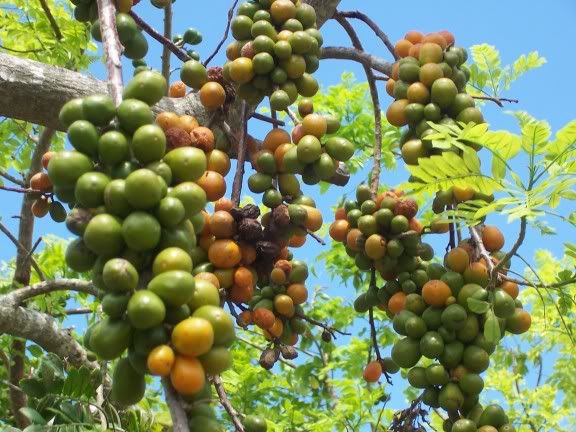
Hog Plum


The fruit of a large tree, which is a native of the Caribbean. It is not usually found in the market but the tree is quite common, fruiting in the dry season the fruit is about 1 inch long and consists of a large seed, sour pulp and a thin orange yellow skin. Many vendors tie-dye them in bags with six plums and sell them to school children.


Recipe

Hog plum jelly 

 wash the fruit and place in a pan, cover with water, simmer for 20 to 30 minutes, strain the juice.

Bring three cups to the boil and to each cup of juice add 1 cup white sugar.  Boil vigorously until ready to set. Pour into prepared jars and seal. 

Jamaican Sky Juice/Suck-Suck

Sky Juice, suck-suck or coolings  was the precursor to the Jamaican Bay Juice. I can fondly remember my grandmother making suck-suck in the summer both for us the grandchildren and to be sold to persons in the community. 
Traditionally it was a drink made with KoolAid, Quench Aid with sugar and lime juice or Syrup with lime juice. I do not remember the price but they were quite cheap. Vendors at the school gate also sold them with red being the most popular. 
Some parents still make them for their children during the summer months when the heat of the sun is bearing down. 

To make them you will need: 
-Your favorite summertime drink.(The ingredients are usually inexpensive so syrup with lime is good.)
- 1 lb poly bags

Instructions
  1. Set the bag in a cup such as a tea cup. Fold the bag over the cup so it does not slide into the cup when drink is poured.
  2. Pour 1 cup of drink into the bag.
  3. Tie the bag.
  4. Place the bag in freezer until frozen solid.
  5. Serve. Kids usually bite off the pointy tip of the bay to get the juice or you can cut it with a knife or kitchen scissors. 


50 Jamaican Dishes

This year Jamaica celebrates 50 years of independence and we are counting down our top 50 Jamaican dishes.
  1. Cornmeal Porridge
  2. Hominey Corn Porridge
  3. Green Banana/Plantain Porridge
  4. Peanut Porridge
  5. Stamp and Go (Saltfish Fritters)
  6. Solomon Gundy
  7. Janga (Crayfish) Soup
  8. Mannish Water (Goat Head Soup)
  9. Pepperpot Soup
  10. Pumpkin Beef Soup
  11. Fish Tea
  12. Red Peas Soup
  13.  Rice and Peas
  14. Jerked Chicken
  15. Jerked Pork
  16. Jerked Sausage
  17. Steamed Fish
  18. Roast Fish
  19. Escovitched Fish
  20. Run Dung
  21. Peppered Shrimp
  22. Ackee and Saltfish
  23. Curried Shrimp/Conch
  24. Curried Goat
  25. Cow Foot and Beans
  26. Tripe and Beans
  27. Stew Peas
  28.  Beef Patty
  29. Roast Breadfruit
  30. Pumpkin/Callaloo Rice
  31. Boiled Dumplings
  32. Callaloo
  33. Festivals
  34. Bammy
  35. Pressed Plantatin
  36. Roast Yam and Saltfish
  37. Fried Dumplings
  38. Vegetable Salad
  39. Cornmeal Pudding
  40. Sweet Potato Pudding
  41. Duckunoo
  42. Toto
  43. Rock Buns
  44. Coconut Drops
  45. Grater Cake
  46. Plantain Tart
  47. Fruit Cake
  48. Bulla
  49. Gratto
  50. Hard Dough Bread
  51. Spice Bun

Naseberries (Saphodilla)

This is the incredible naseberry. There are several varieties that range on size from a small tomato to an orange. My favorite way to have it is to wash (with a cloth to remove the dirt-like substance outside) and eat. I have found that it's flavor is rather mild and does not pair well with other foods. It does go well with amaretto liquer and other almond flavours

Naseberry Smoothie

½ cup milk
2 Tbsp sugar or honey
1/2 tsp almond essence
1 tsp amaretto liqueur (Optional)
½ cup naseberry pulp
4 cups ice
Place the ingredients in a blender and mix until smooth.

Otaheite Apples

Got these Otaheite Apples from the bakyard today. This is the thrird time that I am harvesting from that particular tree since this year . The first two times that the apples came they were sweet and very juicy. This time they are very sweet but not as juicy. I think I'm going to try to make a liquer (otaheite apple wine as we call it) and of course making some delicious dishes.

They can be stewed, cooking the skin separately to make a syrup which they add to the cooked fruit. Many people add the petals of the red-flowered hibiscus  to make the product more colorful.The  apples are often cooked with acid fruits to the benefit of both. They are sometimes made into sauce or preserves. The slightly unripe fruits are used for making jelly and pickles..
Both red and white table wines can be made from the apple. The fruits are picked as soon as they are fully colored (not allowed to fall) and immediately dipped in boiling water for one minute to destroy surface bacteria and fungi. The seeds are removed and, for red wine, the fruits are passed through a meat grinder and the resulting juice and pulp weighed. To this material, they add twice the amount of water and 1 1/2 lbs (680 g) of white sugar per gallon, and pour into sterilized barrels with the mouth covered soon with cheesecloth. Yeast is added and a coil inserted to maintain circulation of the water. The barrels are kept in the coolest place possible for 6 months to 1 year, then the wine is filtered. It will be of a pale-rose color so artificial color is added to give it a rich-red hue. In making white wine, the fruits are peeled, the only liquid is the fruit juice, and less sugar is used, only 1 1/4 lbs (565 g) per gallon, so as to limit alcohol formation over a fermenting period of 3 to 6 months.
 

The flowers can beeaten in salads or preserved in syrup.